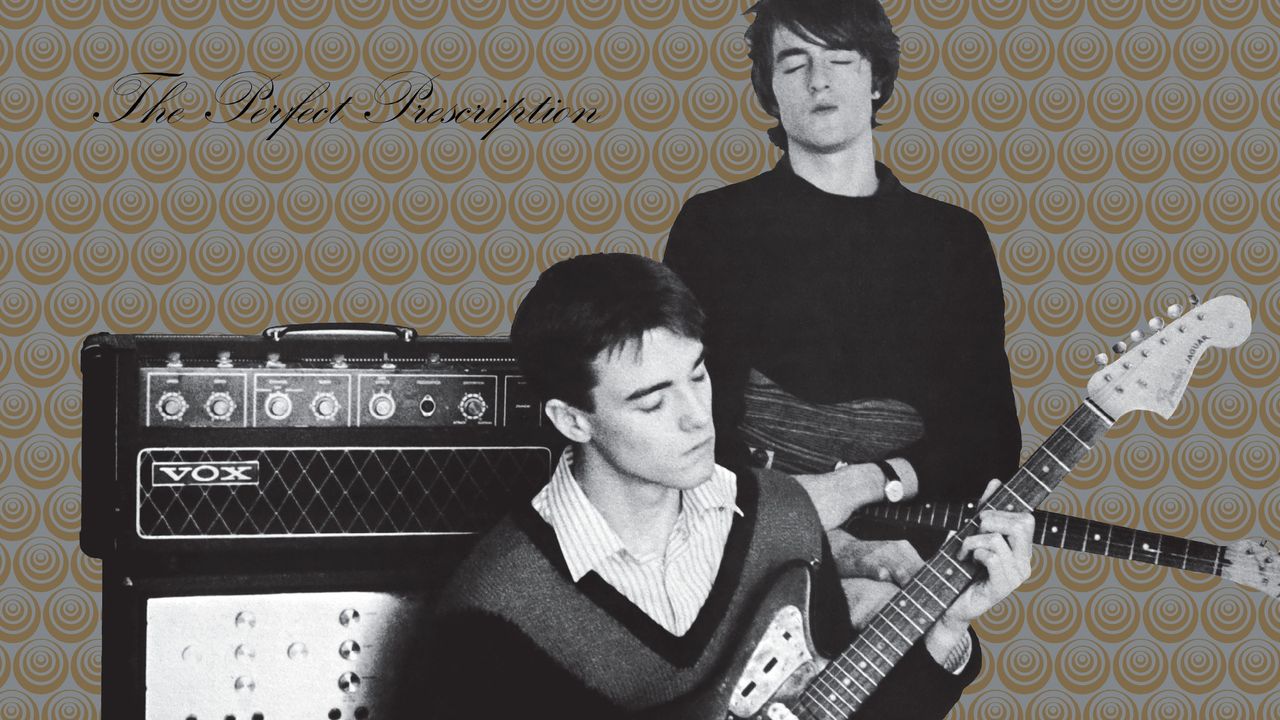
Genius, accident, estupenda, estúpido—it fundamentally doesn’t matter, because on The Perfect Prescription, one fuels the other. Limited facility made each move substantial, just as one key change in a sustained hum can hit like tectonic plates colliding. Over time, a familiar retelling has presented the record as a hot dose from start to end: kicking off with a mighty rush (“Take Me to the Other Side”), seeing stars (“Ode to Street Hassle”), getting cosy with dependency (“Feel So Good”), and then turning blue. But this is too elegant, too linear. What I hear on The Perfect Prescription is more ragged, more intuitive, and ultimately more compelling. You can arrange all the elements but you can’t sway a trip. At some point, you have to simply let go.
They power down with “Call the Doctor,” the greatest Spacemen 3 song of all. Heroin, LSD, coke, or otherwise, no drug opus is complete without the crash, so this one’s a motherfucker: Our narrator is seconds away from death. And when Kember sings about overdosing, you’d wager your life it’s real. The call-and-response vocals and sweet moments of riff affirmation across “Feel So Good” and “Come Down Easy” are gone. He’s calling out to someone to hide the spoons, but they’re gone too. At the denouement, Kember is completely alone, his flat, narcotized baritone dripping onto the faded guitar notes like melted mercury. Neither maudlin nor melodramatic, and without any glorification, the song is infected by the same chilling gloom which has glommed onto the best of Messrs Linkous, Berman, and Drake.
As much sway as “Call the Doctor” holds over me, it never fully sat right with its creator. Nor did much of The Perfect Prescription. Long after the band’s final show at Reading Festival in 1989, Spacemen 3 continued to chip away at the album’s source material. A few moves didn’t quite take: 2008’s DJ Tones EP was a sick idea, if there were more than a half-dozen DJs in the world bold enough to execute a mid-set drop of “Transparent Radiation”’s violin mix. In 2003, however, Kember made a splash with Forged Prescriptions, a re-release that favored fuller mixes and extra overdubs which the band had jettisoned owing to the difficulty of reproducing them.