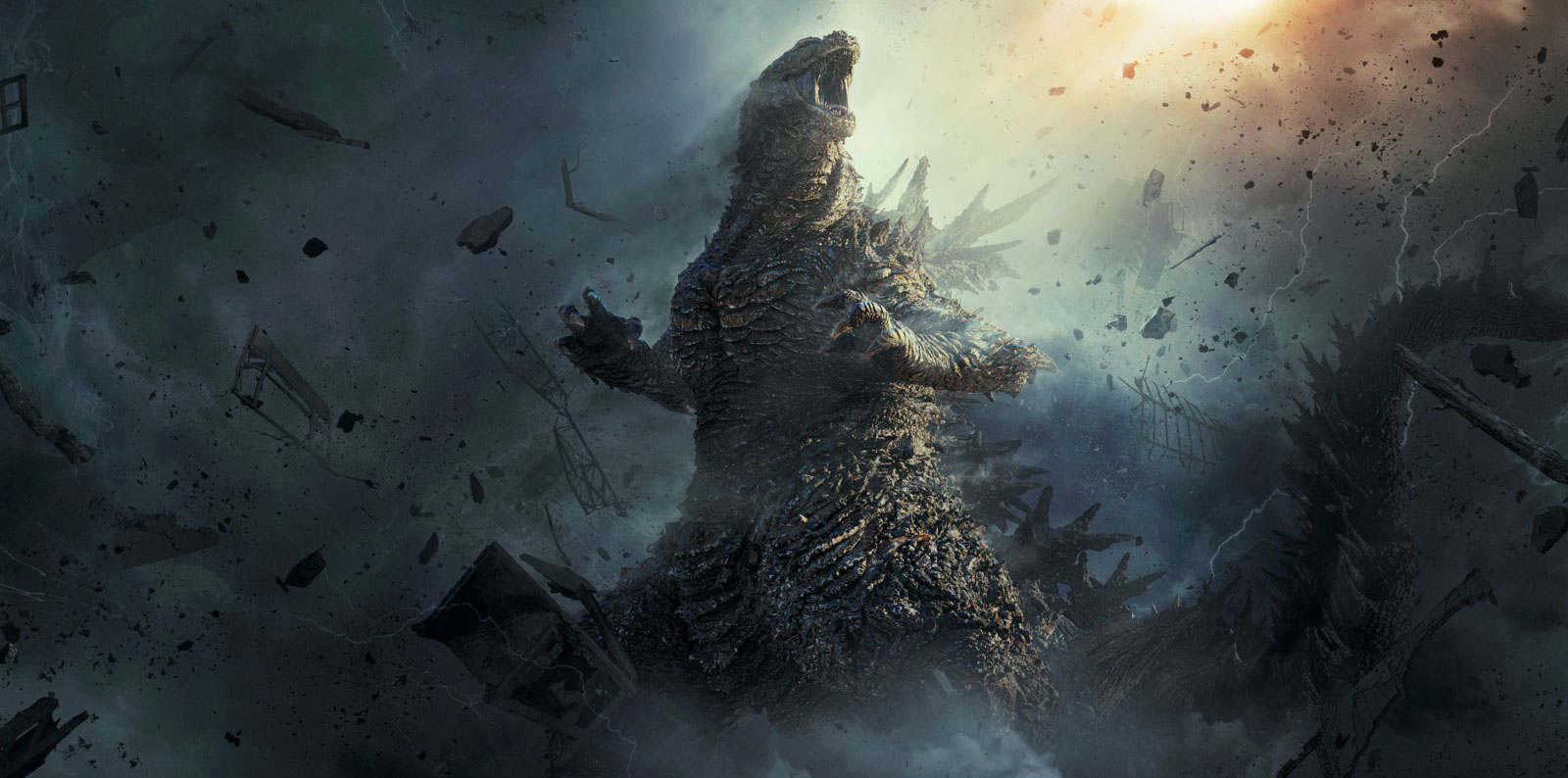
NOW IN THEATERS! The radioactive, fire-breathing kaiju is back in Takashi Yamazaki‘s Godzilla Minus Zero, a dutiful and different follow-up to his Oscar-winning Godzilla Minus One. This time the big guy isn’t the only monster Japan has to worry about. Will this country ever catch a break?
It’s 1949, two years after Godzilla flattened Tokyo; our hero pilot Kōichi Shikishima (Ryunosuke Kamiki) is trying to live a quiet life after obliterating Godzilla in the first film. He’s built a makeshift family with Noriko (Minami Hamabe) and their adopted daughter, Akiko (Sae Nagatani), who is now four years old. Our family and the rest of Japan just want to rebuild, but before anyone can take a deep breath, another giant monster drops from space onto a small Japanese town. People run through the streets, trying not to get killed by its electrical breath, which can lift entire buildings. This alien monster is King Ghidorah.
News of the attack reaches Tokyo’s Disaster Response Bureau, and weapons engineer Kenji “Doc” Noda (Hidetaka Yoshioka) gets to work. Japan’s military is still in pieces after the war, so the Americans step in to “assist.” From their base on the Japanese mainland, they offer prototype fighter planes and a powerful new “fuel-air” bomb. The catch is that no American will fly the mission, so Japanese pilots have to. Shikishima is their only real pilot, but the team refuses to ask him because he’s already done his duty to the country. Noda just wants him to train the younger pilots.
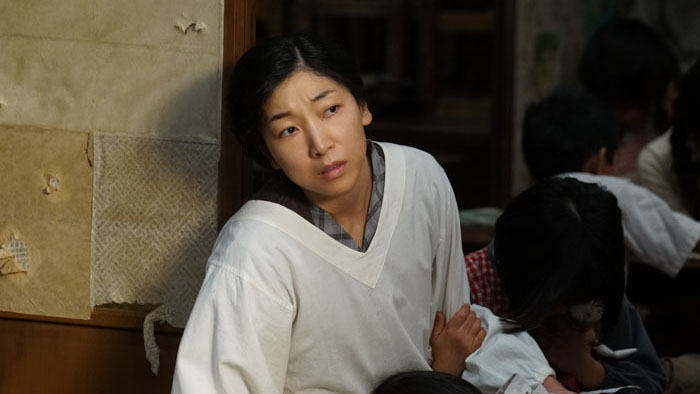
Sumiko (Sakura Ando) watches over the children at an orphanage in Godzilla Minus Zero.
“…before anyone can take a deep breath, another giant monster drops from space onto a small Japanese town.”
Meanwhile, Noriko works at a neighbor’s orphanage, a daily reminder that Japan is full of children like their little Akiko. No one knows that when Noriko was exposed to Godzilla’s atomic breath, she began growing Godzilla-like scales, and her eyepatch hides her reptilian eyes. All goes to hell when Shikishima is asked to drop the fuel-air bomb on King Ghidorah. Unfortunately, this only angers Ghidorah, who grows two more heads and takes on its classic look. How can Japan possibly take down an even more dangerous kaiju? They can’t. Can they?
“American movies suck.” That’s the first thing I said when Godzilla Minus One started, and it’s the same thing I said as Godzilla Minus Zero began. Look, I’m the story guy. I like a good story, and if you happen to put good action and good special effects around it, that just enhances it—but you have to have that good story. Writer/director Takashi Yamazaki gets that. The movie opens with a little town, the filmmaker’s own hometown, being attacked by King Ghidorah, and you’re on the ground with these people running through the streets trying not to get killed. Quite frankly, some of them do get killed, and it’s not the way you want to go out. The music builds up to this moment of devastation, and just like that, you’re right back at the end of the last movie.
The monster fights are great, but what made the first movie so great, and what makes this movie so great, is the relationship between Shikishima, Noriko, and Akiko. This is a hastily assembled family: husband, wife, and daughter. None of them are related, and they never met before Godzilla showed up. This time, all three of them serve a specific purpose. Even Akiko has lines and gets a pivotal moment in the main storyline. So you have an entire country being attacked by Ghidorah and Godzilla, and then the movie moves in close on these three characters. That’s all it is—simple storytelling. No diversity committee is counting how many Black or white people are in it or tallying up lines between men and women. They just wanted to tell a good story…period.
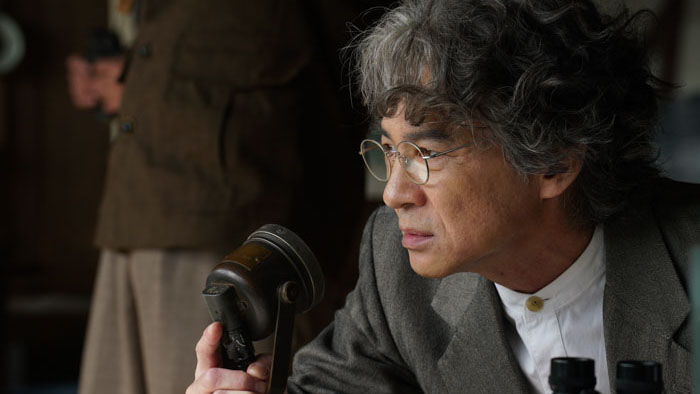
Doc Noda (Hidetaka Yoshioka) keeps watch with a microphone in hand in Godzilla Minus Zero.
“…what made the first movie so great, and what makes this movie so great, is the relationship between Shikishima, Noriko, and Akiko.”
Don’t get me wrong. The monster fights are worth the price of admission. This one ramps up the action. The special effects look real, as if artists and programmers cared about quality. There’s even more violence, and it earns its R rating. People get crushed and thrown high into the air. You must see this in IMAX, or you’ll lose two-thirds of the action. What I loved most was the story’s unpredictable nature. It always keeps audiences guessing. Where is this film going next?
It’s a very Japanese story, yet it feels universal, with themes of heroism and sacrificing your life for your country and your people at its heart. The low budget helps, too, because it cuts out the executive-committee bloat that keeps American films from focusing on the human story and the action. Godzilla Minus Zero will be one of my favorite movies of the year. I walked out just as giddy as I did after Minus One, and I highly recommend it. Oh, and it’s clearly better than The Odyssey.
American studio execs, take note. Takashi Yamazaki proves you don’t need a giant budget or a committee like yours to make a great monster movie—just a family worth caring about and a true love for monsters duking it out over a defenseless city. Godzilla Minus Zero leans harder into action than Minus One, but it’s unpredictable, heartfelt, and everything an American monster movie isn’t.